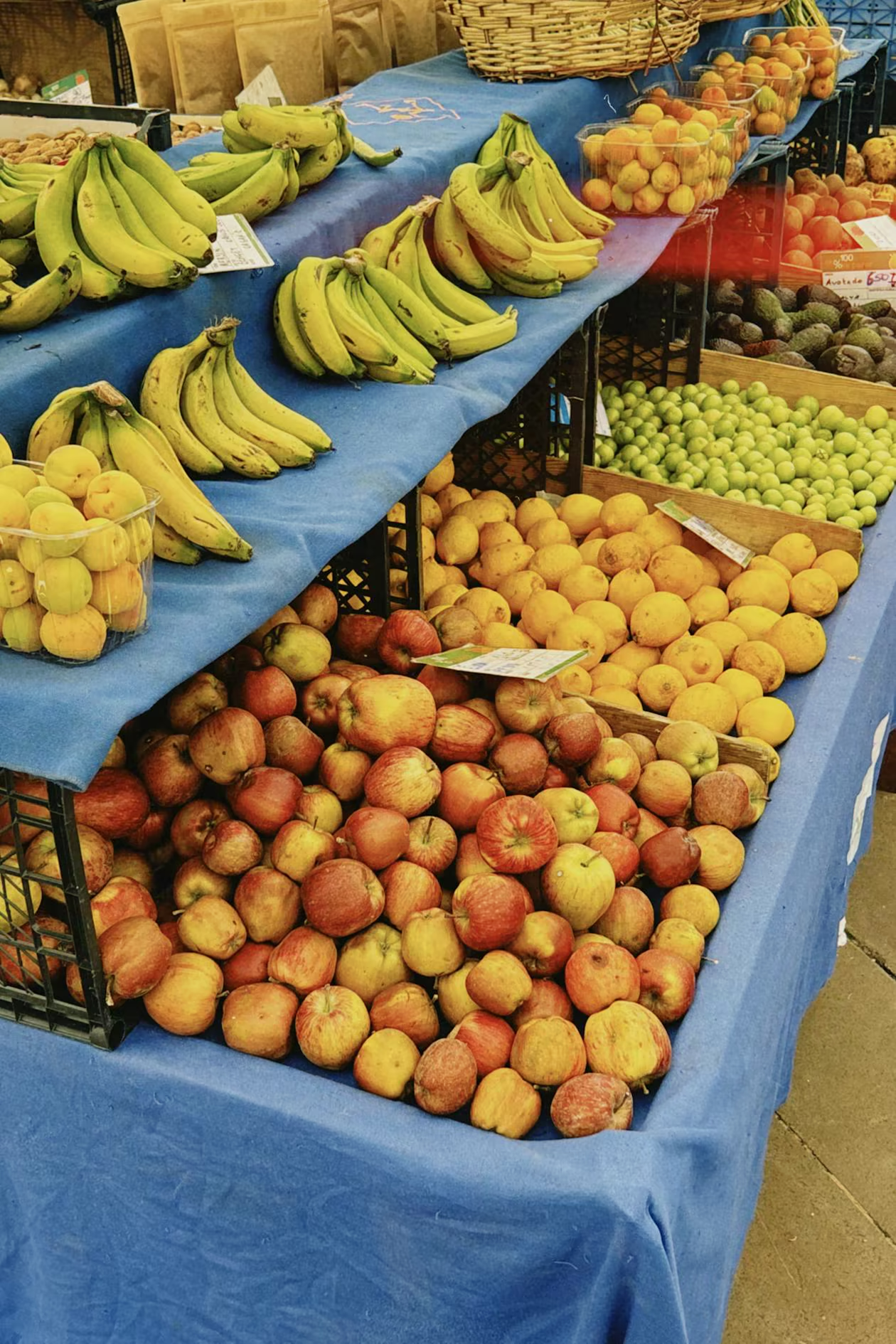
7 Farmers Market Trends Shaping Spring 2026
As winter fades and spring markets open across the country, farmers markets are experiencing a renaissance. A March 2025 University of Wisconsin study found that 80% of Americans now visit a farmers market at least once a year, with 41% attending six or more times annually. But what's driving this growth in 2026? We researched the latest trends to bring you what's happening right now.
1. The "Hyper-Local" Movement
Consumers are no longer satisfied with simply "local"—they want hyper-local. Shoppers want to know exactly which farm grew their tomatoes, how many miles they traveled, and who's behind the produce stand.
"I've noticed a growing demand for hyper-local sourcing," says Juan Cabrera, head chef at The Restaurant at North Block. "More restaurants and consumers want to support small growers, which creates both opportunity and healthy competition for the best products."
This trend accelerated during the pandemic and shows no signs of slowing. Closer sourcing means fresher food, lower carbon footprints, and stronger community connections.
2. The Full Grocery Experience
Today's farmers markets have evolved far beyond fruits and vegetables. The most successful markets now offer:
- Artisan breads and pastries
- Farm-fresh cheeses and dairy
- Locally raised meats and eggs
- Fermented foods (kimchi, pickles, kraut)
- Handcrafted goods (candles, woodwork, textiles)
- Ready-to-eat prepared foods
"I love that farmer's markets aren't just produce anymore," shares Maike Corbett, founder of Cheerful Cook. "Sure, the local veggies still come home with me, but now I can also grab a French-style baguette and pastries, artisan cheeses or meats."
3. Cooperative Marketing: Farms Supporting Farms
One of 2026's most interesting developments is the rise of cooperative marketing—farms specializing in what they grow best, then sourcing from neighboring farms to offer customers greater variety.
"You'll see vegetable farmers partnering with local grains growers, livestock farmers and other businesses to fill up their farm stores and market stands," explains Devin Cornia, executive director at Northeast Organic Farming Association of NJ. "This gives customers a one-stop shopping alternative to the supermarket."
This collaboration allows smaller farms to compete with larger operations while maintaining quality and diversity.
4. Spring Produce Is Back—With a Focus on Seasonality
As markets open for spring 2026, early-season favorites are returning:
- Asparagus – The quintessential spring vegetable
- Radishes – Quick to mature, colorful, and crunchy
- Artichokes – Peak flavor in spring
- Overwintered greens – Spinach, broccoli rabe, and kale
- Rhubarb – Perfect for pies and preserves
- Strawberries – Making their first appearances (slightly delayed this year due to late frosts)
"The biggest thing I tell people is to shop by season, not by recipe," advises Shruthi Baskaran-Makanju of Urban Farmie. "If you know what's in season right now, you'll cook better food and waste less of it."
5. Major USDA Investment in Local Food Systems
On March 10, 2026, the USDA announced $26.8 million in new funding through the Local Agriculture Market Program (LAMP). This investment includes:
- $11.1 million for the Farmers Market Promotion Program (43 projects across 28 states)
- $11.1 million for the Local Food Promotion Program (37 projects across 24 states)
- $4.7 million for Regional Food System Partnerships (7 partnerships across 10 states)
"This funding is putting Farmers First by helping them connect with new markets, strengthening their businesses, and boosting economic resilience in rural communities," said U.S. Secretary of Agriculture Brooke L. Rollins.
This federal support signals continued institutional backing for local food systems.
6. Markets as Community Classrooms
Farmers markets are increasingly viewed as educational spaces where consumers learn about food, seasonality, and sustainable agriculture firsthand.
"Farmers markets are one of the last places where food education happens in real time, face to face," says Michele Thorne, executive director of the Good Meat Project. "There's no algorithm, no label doing the talking for you. Just a producer, a product and a conversation."
Many markets now offer:
- Cooking demonstrations
- Food preservation workshops
- School garden programs
- Recipe exchanges
- Meet-the-farmer events
7. The Economic Impact: Keeping Dollars Local
The numbers tell a compelling story about why farmers markets matter:
| Metric | Farmers Markets | Supermarkets |
|---|---|---|
| Farmers keep | ~90¢ per $1 | ~16¢ per $1 |
| Annual visitors | 80% of Americans | — |
| Frequent shoppers (6+ times/year) | 41% | — |
Additionally, nearly half of farmers market visitors shop at other nearby local businesses during the same trip, creating a multiplier effect for local economies.
"Farmers take home approximately 90 cents on the dollar for items they sell at the farmers market," notes the Daily Herald. "Compare that to the 15.9 cents per dollar they average at supermarkets and big box stores."
What This Means for You
Whether you're a seasoned market-goer or planning your first visit this spring, here are three ways to make the most of the 2026 farmers market season:
Ask questions – Talk to vendors about their farms, practices, and recommendations. That's the hyper-local advantage.
Shop the whole market – Explore beyond produce. Try the bread, cheese, fermented goods, and artisan products.
Think seasonally – Build your meals around what's fresh right now, not what a recipe demands. Your food will taste better, cost less, and support local farmers.
Find Your Local Market
Ready to experience these trends yourself? Use our market locator to find farmers markets near you, check opening dates, and see what vendors are participating this season.
The spring 2026 market season is here—and there's never been a better time to buy local.
Sources: USDA press releases (March 2026), University of Wisconsin study (March 2025), Daily Herald reporting, industry expert interviews.
About FarmerMarket.us
FarmerMarket.us connects consumers with local farmers markets across the United States. Our mission is to make fresh, local food accessible to everyone while supporting the farmers and communities that make it possible.
Have a market story to share? Contact us or tag us on social media.