
Earth Day at the Farmers Market: How Your Saturday Morning Shop Supports the Planet
Earth Day arrives on April 22, and for many Americans, it's a reminder to think a little harder about the choices we make every day — what we drive, what we throw away, and, increasingly, what we eat. In 2026, climate headlines dominate our feeds, corporate pledges make promises that are hard to verify, and it can feel like individual action doesn't count for much.
But there's one Earth Day habit that actually moves the needle: shopping at your local farmers market. It's not glamorous, and it won't trend on social media. But stacked up over a season, the food choices you make at a Saturday morning market have a measurable environmental impact — and they support the kind of small-scale agriculture that many scientists now consider essential to a livable future.
The Mileage Problem — And Why Local Food Shortens It Dramatically
The average item of produce in an American supermarket travels roughly 1,500 miles from farm to shelf, according to research frequently cited by the USDA and the Leopold Center for Sustainable Agriculture. A strawberry picked in California can spend a week in refrigerated trucks before it reaches a grocery store in Ohio. Tomatoes are shipped from Mexico in the winter, apples from New Zealand in the summer.
Contrast that with your local farmers market. Most vendors drive in from farms within 50 to 100 miles. Many travel less. The tomatoes on their table were often picked the day before. That enormous gap in transportation distance translates directly into lower fuel use, less refrigeration, less packaging, and fewer emissions from the cold-chain logistics that move food across continents.
It's not just about carbon. Produce that travels shorter distances doesn't need to be bred for durability over flavor. Farmers can grow heirloom tomatoes, delicate lettuces, and ripe-picked fruits that would never survive a cross-country truck ride. The environmental win and the flavor win happen at the same time.
Small Farms, Better Soil
Behind every market table is a farm, and the way those farms manage their land is one of the most important — and overlooked — environmental stories of our time.
Small-scale producers who sell at farmers markets tend to practice what agricultural researchers call regenerative agriculture: cover cropping, crop rotation, reduced tillage, and diverse plantings. These practices build soil organic matter, which means the ground itself is pulling carbon out of the atmosphere and storing it underground. A 2023 review from the Rodale Institute found that healthy farm soils can sequester meaningful amounts of carbon per acre each year, something monoculture industrial fields simply cannot match.
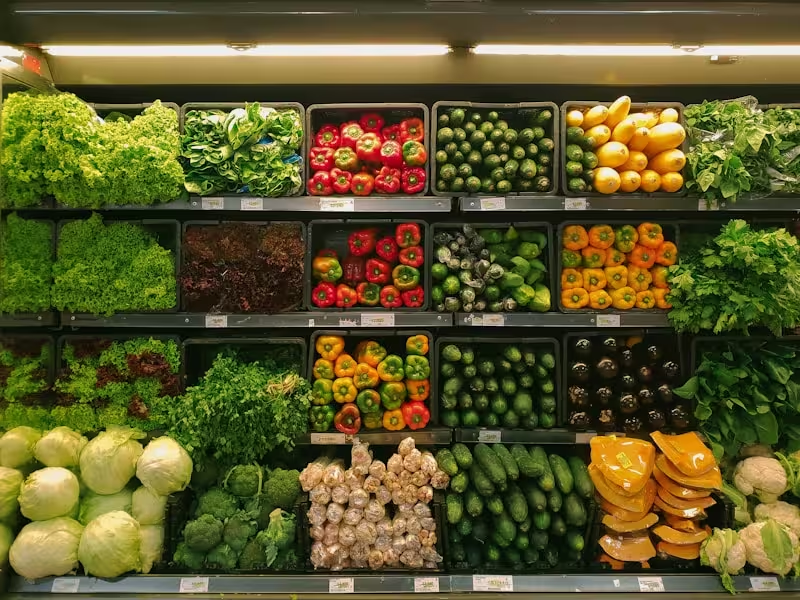
When you buy a bunch of spring onions from a small farm, you're directly funding that farm's ability to keep practicing regenerative methods. Industrial operations that flood grocery store supply chains are under enormous pressure to maximize yield at any cost. Small farmers who sell direct-to-consumer have the economic flexibility to make long-term decisions about their soil. Your dollar keeps them in business.
Packaging, Waste, and the Plastic You Don't Bring Home
Walk the aisles of any supermarket and count the plastic: clamshells holding berries, plastic-wrapped cucumbers, twist-tied bags of apples, shrink-wrapped trays of mushrooms. Even organic produce is often double-wrapped. All of that packaging ends up somewhere — usually a landfill, sometimes an ocean.
At the farmers market, most produce is sold loose. You bring a tote, a few reusable produce bags, maybe a basket, and you fill them up. The eggs come in a carton the farmer will happily take back and refill next week. Bread comes in a paper sleeve. Greens are bunched with a rubber band. The waste stream shrinks dramatically.
It adds up. A household that shifts even half of its produce buying to a local market can eliminate hundreds of pieces of single-use plastic over a year.
Biodiversity on Your Plate
Industrial agriculture has narrowed the genetic pool of the food we eat. A handful of tomato varieties dominate supermarket produce sections. The same few apple cultivars appear everywhere. This uniformity is efficient for shipping and storage, but it's fragile — a single disease that targets a dominant variety can ripple through the food system.
Farmers markets are where agricultural biodiversity survives. You'll find purple carrots, green-striped zebra tomatoes, pink fir apple potatoes, seven kinds of kale, dozens of apple varieties each fall. Every farmer growing an unusual heirloom is preserving genetics that might otherwise disappear. Supporting those growers isn't just a nice-to-have — it's how seed diversity stays alive in working fields instead of frozen seed banks.
Community Is an Environmental Issue, Too
It's easy to think of Earth Day as only about carbon and ecosystems. But the social fabric around food matters too. Farmers markets build relationships between eaters and growers. You learn your farmer's name. You hear about the late frost that hit their strawberries. You find out which field the arugula came from.
That connection changes how people think about food. When you know the person who grew it, you waste less of it. You care more about the soil it came from. You're more likely to pass that awareness on to your kids. Climate action depends on the kind of everyday commitment that abstract statistics rarely inspire — and farmers markets quietly build it, one Saturday at a time.
What to Buy This Week
If you're heading to your local market this Earth Day weekend, late April is prime time for a wide range of seasonal produce. Look for asparagus, which is at peak in much of the country. Ramps — wild spring onions with an unmistakable garlicky smell — are appearing at markets in the Appalachians, Midwest, and Northeast. Radishes, green garlic, baby turnips, spring lettuces, spinach, and the very first strawberries in southern regions are all showing up. In warmer climates, early summer squash is starting to roll in.
Whatever's on the tables this week, the most environmentally meaningful thing you can do is simply show up, shop, and keep showing up. Earth Day is one day. A season of farmers market Saturdays is a habit — and habits are what actually change systems.
Find a market near you through our directory and make this Earth Day the start of something you'll keep doing long after April 22.