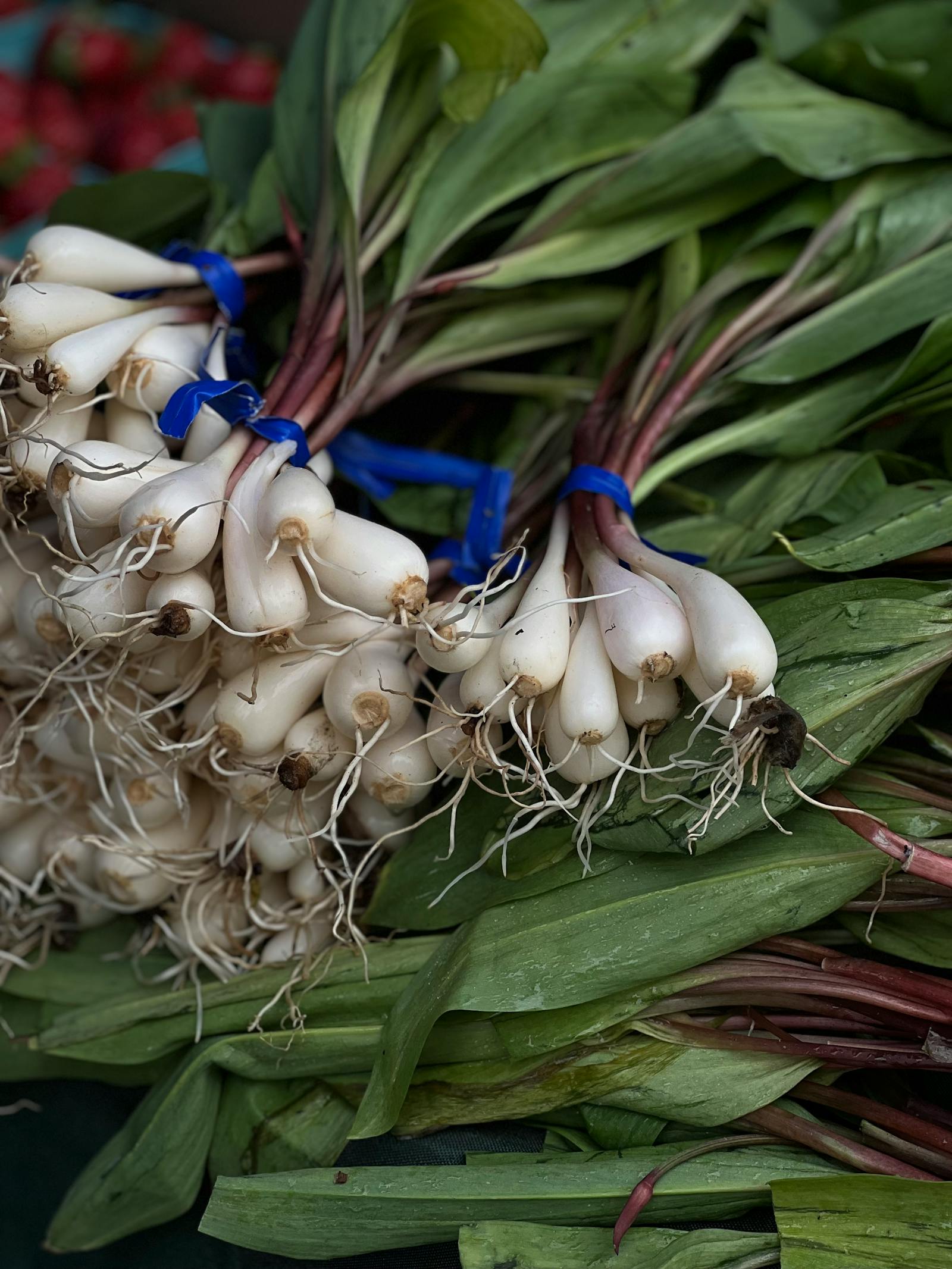
Ramps: The Wild Spring Treasure You'll Only Find at Farmers Markets
Walk into a farmers market in late April and you might catch a whiff of something unmistakable — pungent, garlicky, with a sweet onion finish that lingers in the air. That's the smell of ramps, and if you spot a tableful of them, do not walk past. You have maybe three weeks before they vanish for another year.
Ramps (Allium tricoccum), also known as wild leeks, are one of the most beloved and elusive ingredients in American cooking. They grow wild across the Appalachian mountains and the upper Midwest, pushing up through the leaf litter of hardwood forests as soon as the soil warms. Late April through May is their narrow window, and most of what you'll find at the farmers market has been hand-foraged that very week.
What Makes Ramps Special
A ramp looks a bit like a scallion's wilder cousin: a bright white bulb tapering into a reddish-purple stem with broad, smooth green leaves. The whole plant is edible, and every part is intensely flavored — somewhere between garlic, leek, and spring onion, with a green, almost grassy sharpness when raw and a mellow, deeply savory sweetness when cooked.
Chefs have been chasing ramps for decades. The combination of short season, foraged-only sourcing, and unmistakable flavor turns them into a seasonal ritual at restaurants from Brooklyn to Asheville. But farmers markets are where home cooks finally get a fair shot at them. Prices vary by region — typically $15 to $25 a pound — but a small bunch goes a long way.
Where to Look in Late April
Ramps follow the warming soil. By the last week of April, they're already showing up at markets in:
- The Mid-Atlantic and Appalachia — West Virginia, Virginia, western Pennsylvania, and North Carolina are ramp heartland. Festivals like the Feast of the Ramson in Richwood, WV draw thousands every spring.
- The Upper Midwest — Wisconsin, Michigan, and Minnesota markets see strong ramp seasons through May, especially in towns near the northern hardwood forests.
- New England and New York — Hudson Valley and Berkshire markets typically peak in early to mid-May, with bunches arriving from foragers across the region.
Ask your vendor where the ramps were harvested. Reputable foragers will tell you the county, the forest, and often whether they're harvesting sustainably.
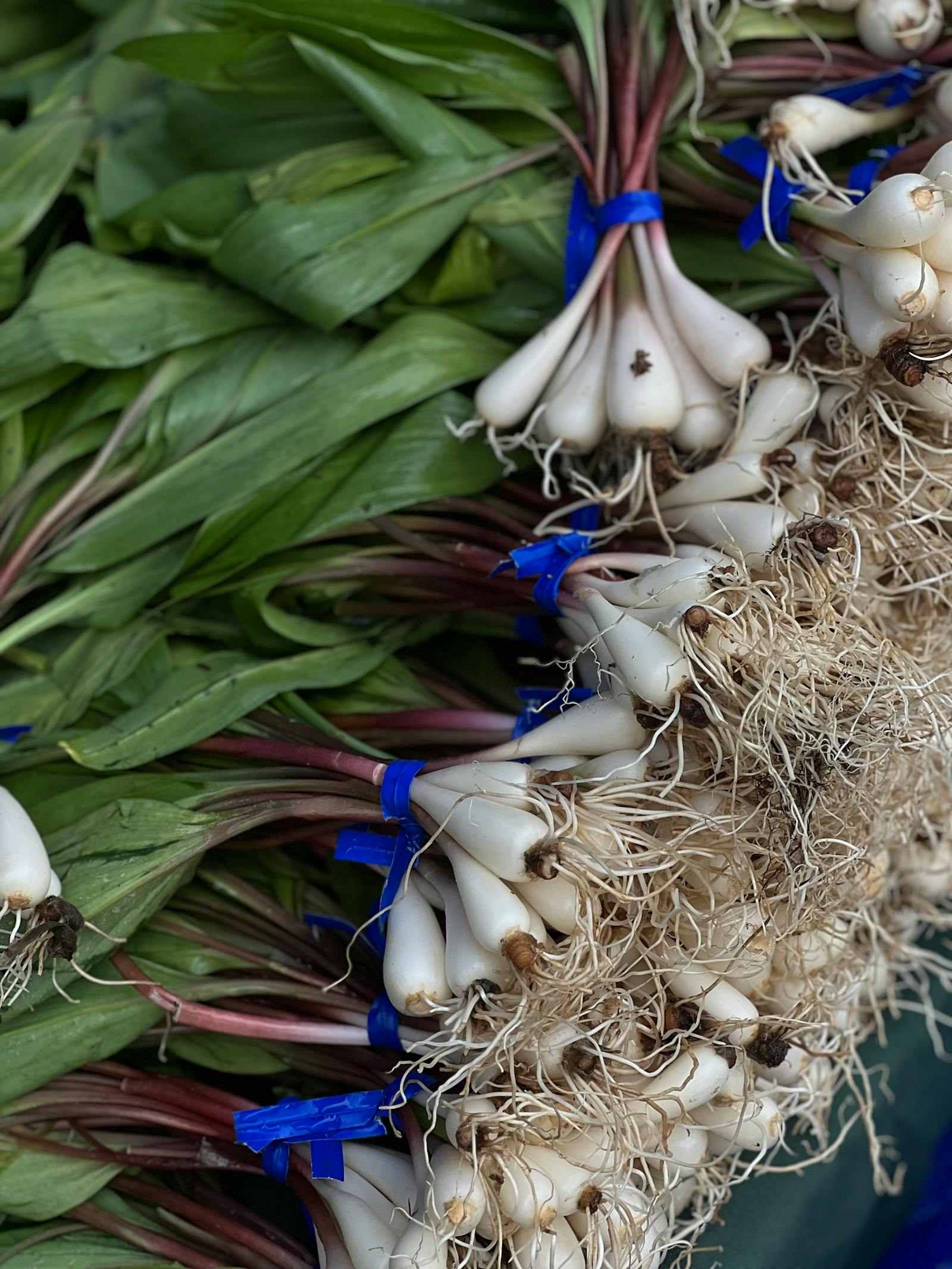
The Sustainability Conversation
Ramps grow slowly. A patch can take five to seven years to mature, and overharvesting has put real pressure on wild populations across their range. In Quebec, commercial ramp harvesting is illegal. In several U.S. states, foragers are now adopting strict guidelines: take only the leaves, or harvest no more than 10 to 15 percent of any patch, leaving the bulbs and roots intact so the plant returns next spring.
When you buy ramps at the farmers market, you have the power to ask the right questions. Did the forager leaf-harvest, or pull the whole plant? Are they rotating their patches? Many vendors now sell leaves-only bunches for a slightly lower price — a small choice that makes a big difference for the patches that fed your great-grandparents and could feed your grandchildren.
How to Cook With Them
Ramps are forgiving. A few favorite uses for your first bunch:
- Compound butter — Finely chop the leaves and bulbs, fold into softened butter with a pinch of salt, and roll in parchment. Freeze and slice onto steaks, eggs, or warm bread for the next month.
- Ramp pesto — Blend with olive oil, parmesan, walnuts or pine nuts, and a squeeze of lemon. Toss with pasta, swirl into scrambled eggs, or spread on sourdough toast.
- Pickled bulbs — Trim the bulbs, blanch briefly, and pack into a quick brine of vinegar, sugar, salt, and a few peppercorns. They keep for months and brighten any salad or charcuterie board.
- Simply grilled — A hot grill, a brush of olive oil, sixty seconds per side. Eat alongside a steak, pile onto toast, or chop into a vinaigrette.
Store fresh ramps wrapped in a damp paper towel inside a sealed bag in the fridge — they'll keep about five days, but they're at their absolute best the day you bring them home.
A Spring Ritual Worth Keeping
There's something honest about a vegetable that only shows up for three weeks a year, that no industrial farm can scale, and that connects directly to a forager who walked into a forest at dawn with a basket. Ramps remind us that some of the best food on the planet still operates on nature's timeline, not the supply chain's.
If your market has them this weekend, buy a bunch. Cook them tonight. The window closes fast — and once it does, you'll be counting the days until next April.